Overview
Woolworths is Australia's largest supermarket chain, with more than 961 operating stores and around 111,000 team members.
Bit of context
Woolworths is an Australian supermarket chain selling groceries, health and beauty products, household goods, pet and baby supplies and stationery. Known as a leading retail innovator in Australia, they were investing over $1 million in research at the Queensland University of Technology.
This was my first design challenge, and I took it on with no experience shopping at Woolworths at all, it was my fifth week in Australia.
The design problem
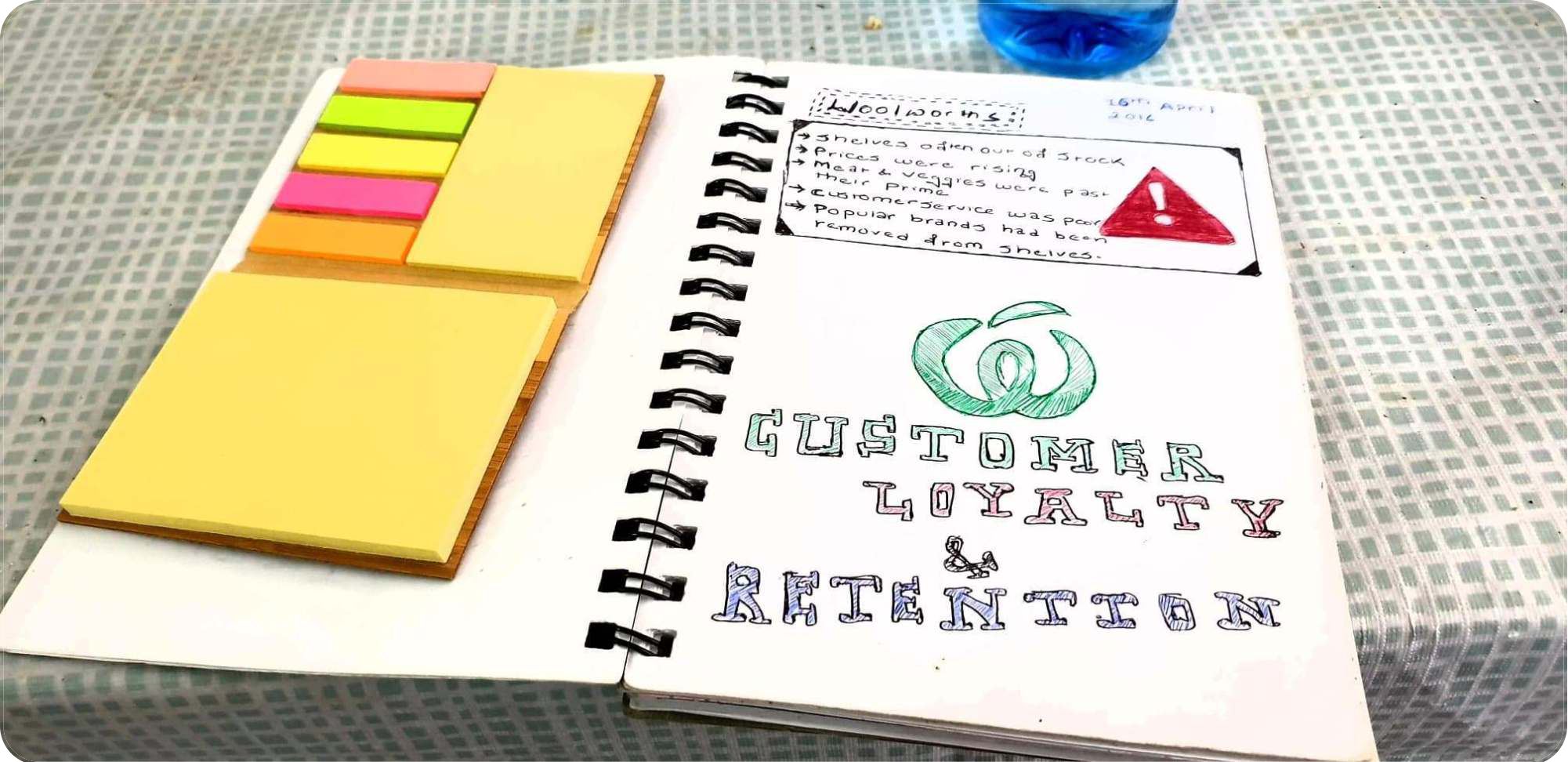
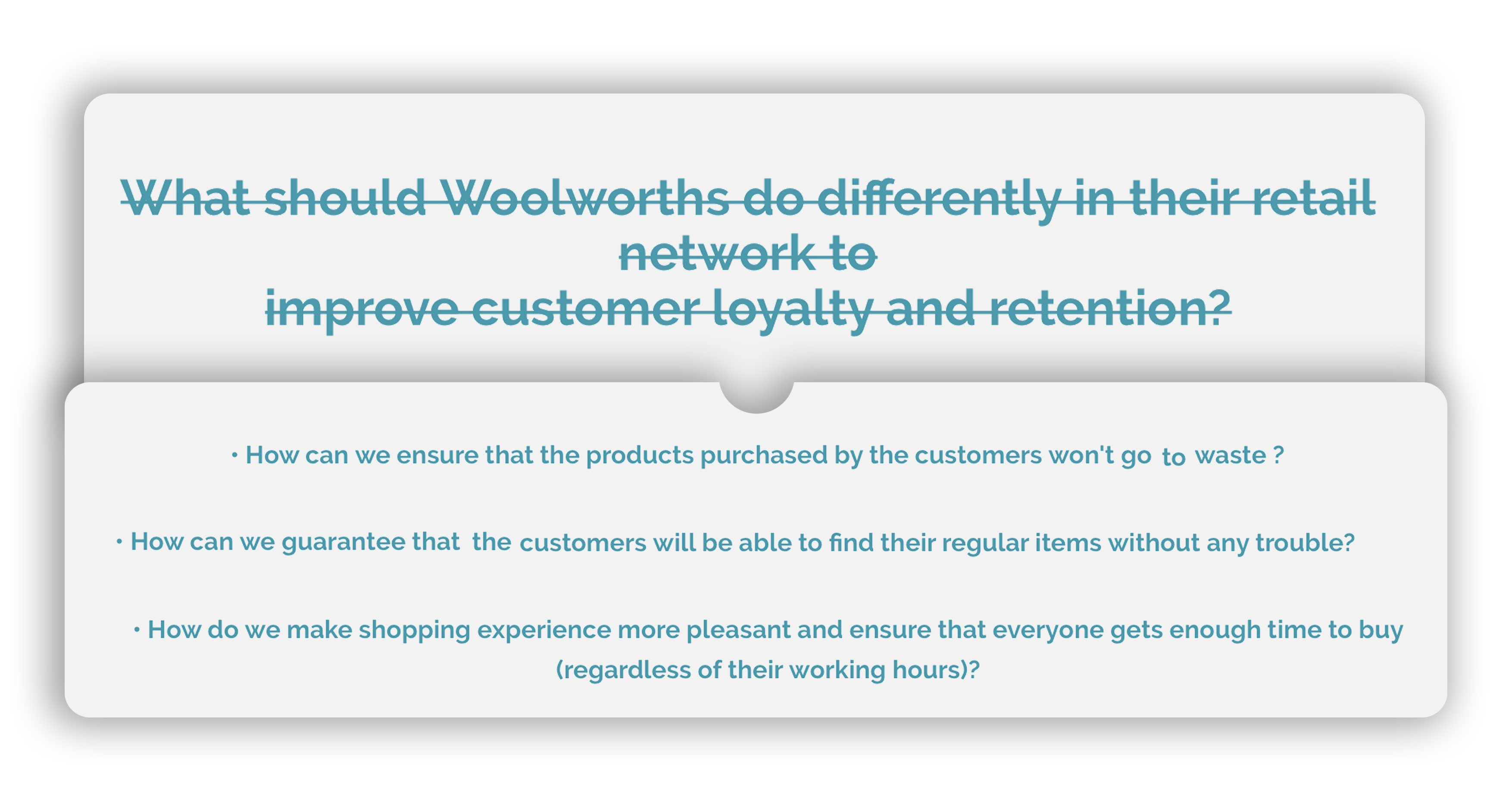
What should Woolworths do differently in their retail network: store formats, products and services, digital service offering, customer experience, to improve customer loyalty and retention? - Woolworths
Woolworths were finding it hard to compete with rivals such as Coles, Aldi and IGA. On top of that, the chain had seen a big decline in the number of customers who used to shop there regularly.
Key goal
Strengthen the Woolworths brand by filling the gaps between customer needs and expectations, to create both retention and attraction.
Make-up of the team
I worked as the lead user researcher throughout the design challenge, accompanied by a business analyst and a UX designer. I produced all the deliverables in this case study and presented them to stakeholders.
Understanding the user
Woolworths is Australia's largest supermarket chain, and sure, anyone capable of shopping is a potential user, but we can't design for everyone. To narrow the group down we ran a brainstorming session. Each of us sat with a pad of sticky notes and wrote down potential user groups, then arranged the notes on a grid by how much we expected to learn from each group and how easy they'd be to reach. We landed on shoppers aged 20–25 who were currently employed.
Bit of context
We agreed not to have more than one user group, to avoid losing focus. When you design for every group, any idea or feature fits at least one of them, and the project gets out of control.
Focusing on the Australian working population has nothing against any other age group or community. We just needed one group to focus on, since different factors affect how people think and act. There were other stakeholder groups too, which I haven't included here as they were outside my scope.
User research
Kick off: existing information
The Woolworths team shared their own customer feedback on what they thought the problem was:
- Shelves were often out of stock.
- Prices were rising.
- Meat and vegetables were past their prime.
- Customer service was poor.
- Popular brands had been removed from shelves.
Bit of context
Despite those facts, they wanted us to run our own research. The Woolworths marketing team had done some insight work beforehand, but the problem seemed too general and out of context; we had no idea when, where or how the research was conducted, what the demographics were, or what counted as data.
General observation
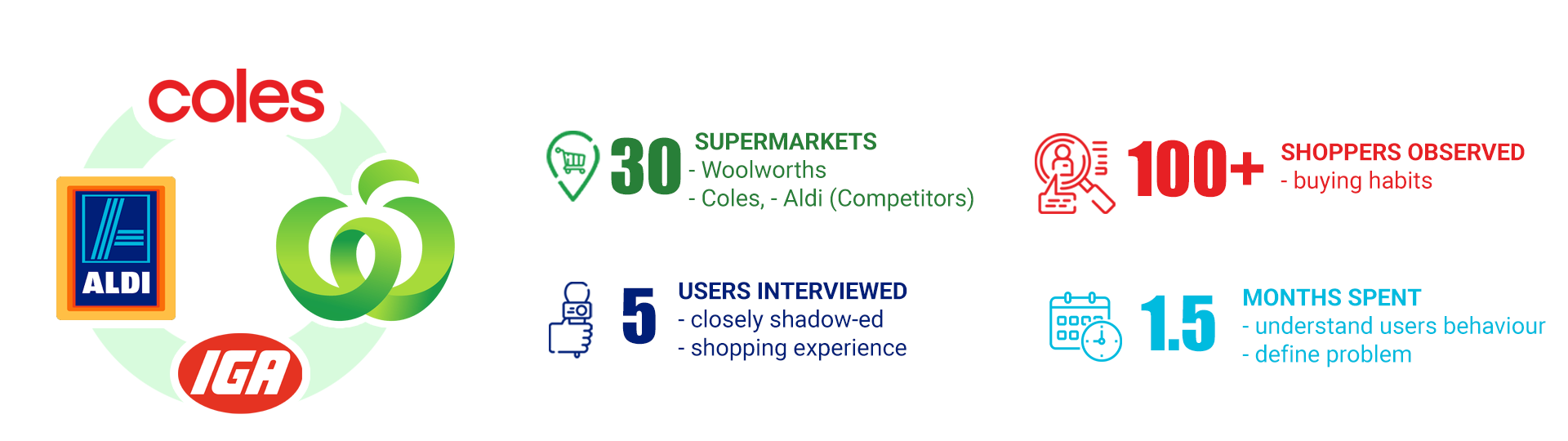
Keeping the stated problem in mind, our team visited 30 supermarkets including Woolworths, Coles, Aldi and IGA. We spent 15–20 minutes at each observing customer behaviour, checkout counters and shelves, for a week between 5 and 7pm and again early morning, the ideal shopping times, before and after work. We noted what we saw.
Note: this was plain observation, nothing detailed.
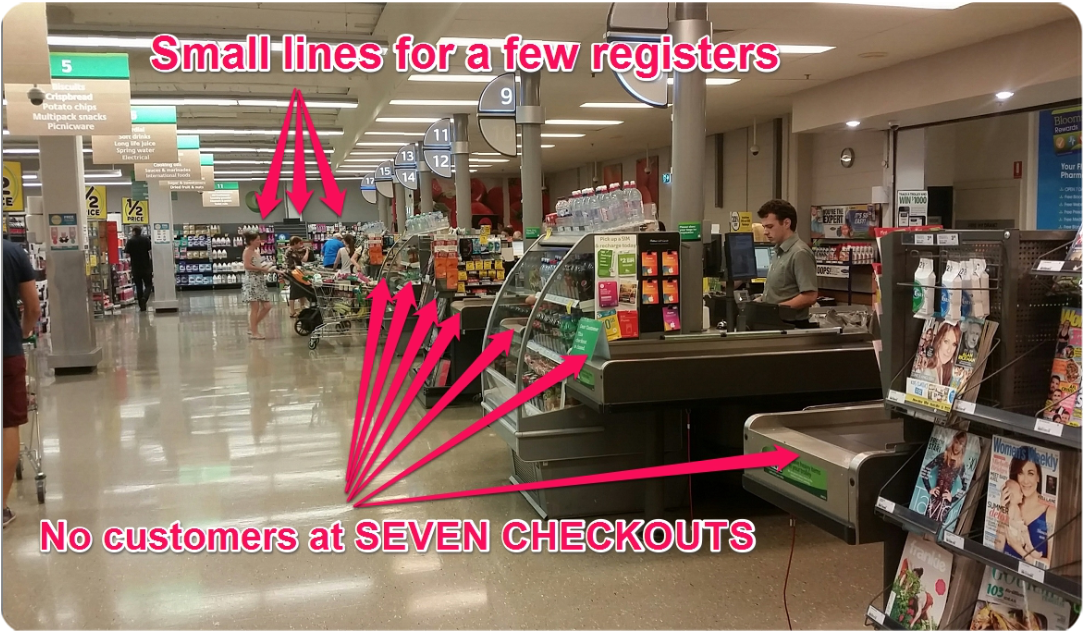
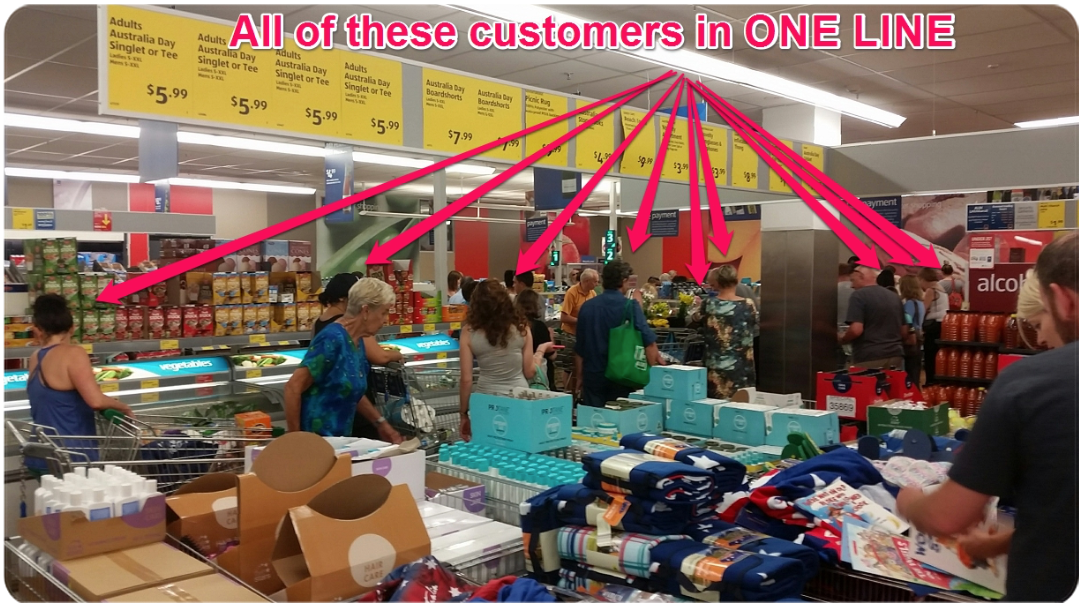
What stood out was that of the seven checkout counters at most Woolworths stores, at least five had little or no customers for more than two hours. At their competitors, the service counters were full.
Main takeaway
The observation confirmed that Woolworths was indeed losing customers to competitors, or failing to make its stores appealing. What was interesting is that the reasons given by the marketing research team didn't add up: shelves were restocked, and we found no expired products during our observations. We hypothesised instead that there were simply too many competitors right next to Woolworths stores, splitting up shoppers who used to be loyal.
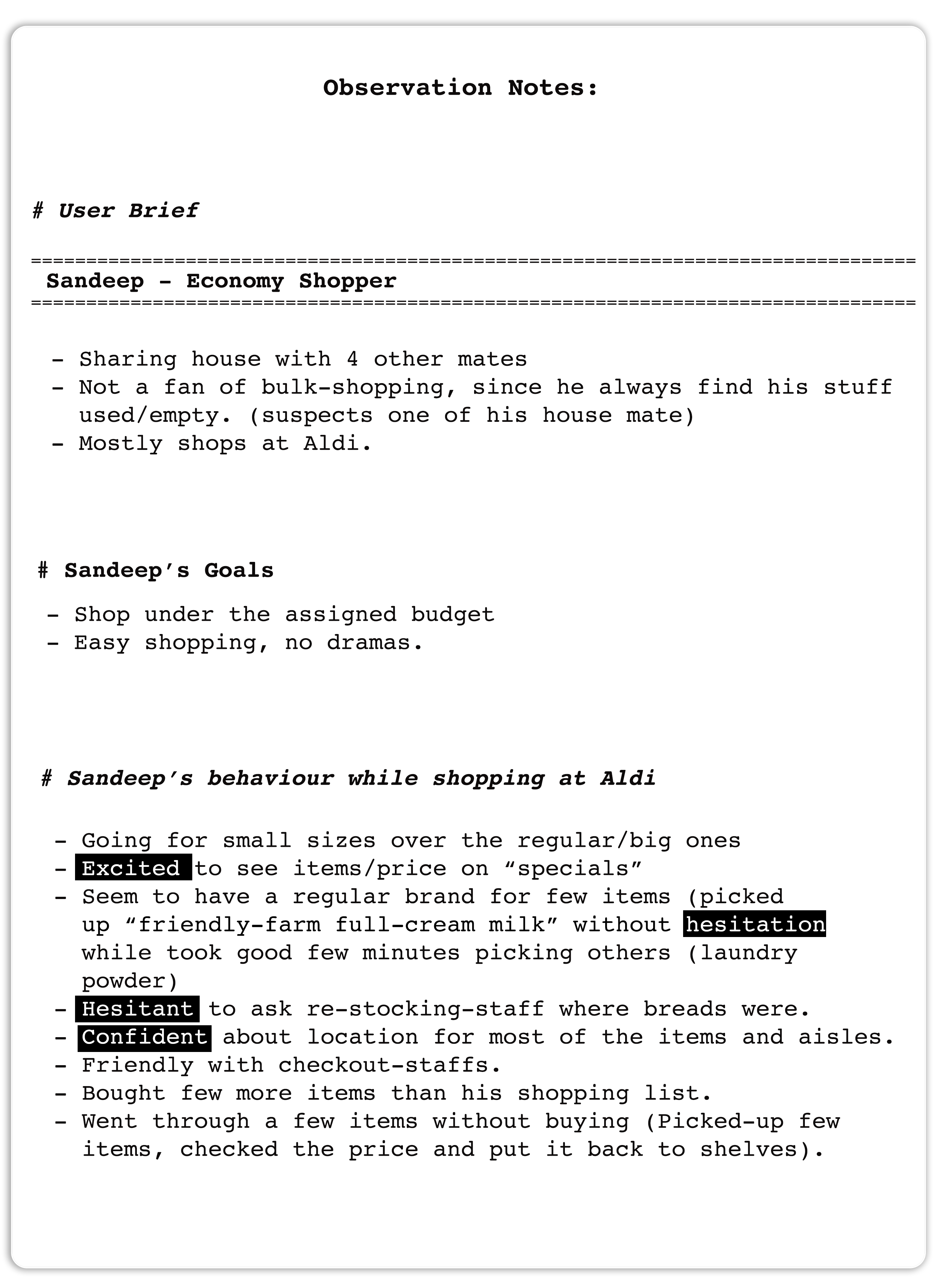
Ethnographic observation and contextual interviews
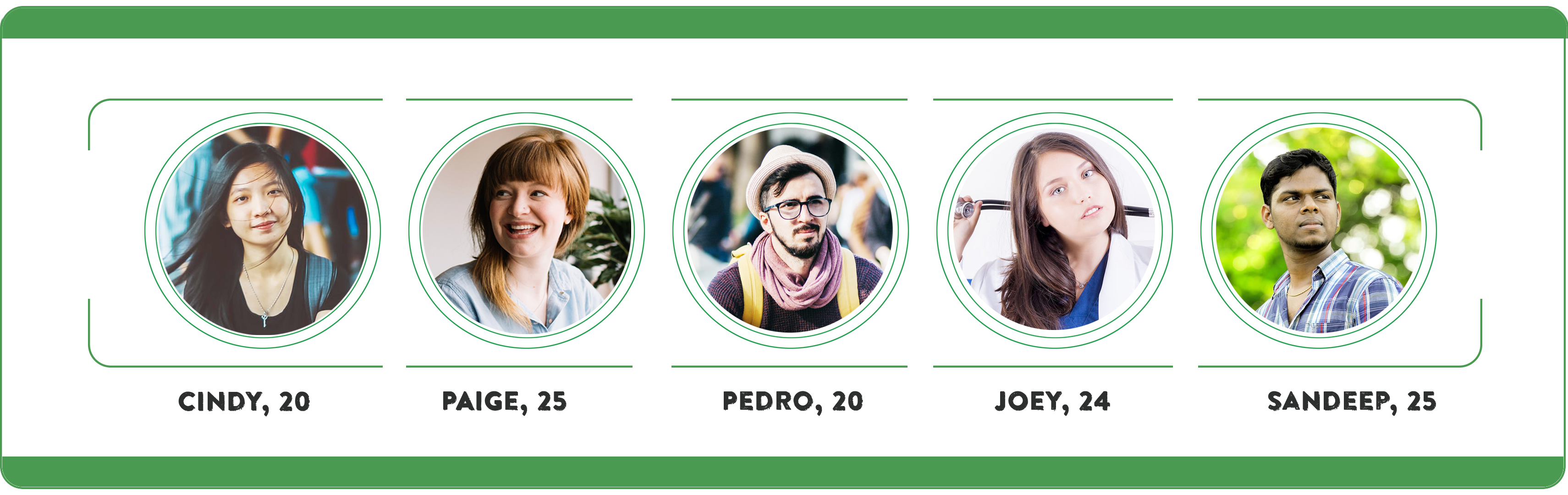
Recruiting users: we screened and recruited five shoppers matching our eventual customers within a 20km radius, then got an informed consent document signed so we could shadow their shopping.
For compensation we had two options: pay for their next grocery shop, or give them a gift card. We chose the gift card, handed over at the end of the session, because telling people we'd pay for their groceries would very likely change how they shopped. Some might buy things they didn't need; others might hold back. Either way we'd see something other than their normal habits.
Rather than give participants a time and location, we asked them to tell us next time they were going shopping. Again, the idea was not to influence them or put them into a test condition, but to let them behave as they normally would.
We can't disclose everything from the contextual interviews for ethical reasons, but the deliverables below are the takeaways on shopper behaviour and experience.
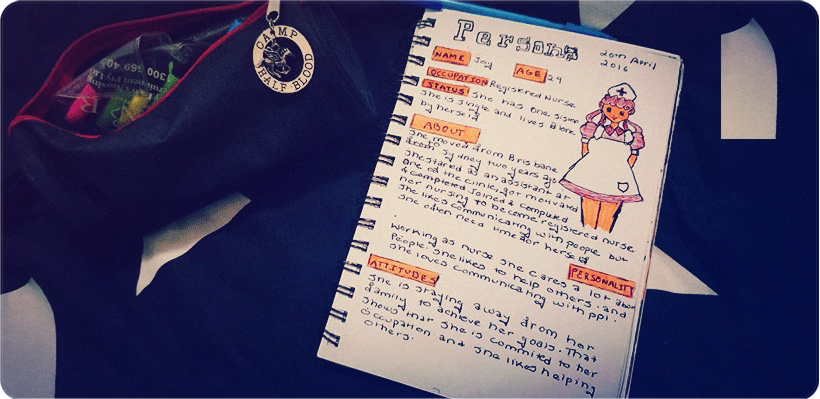
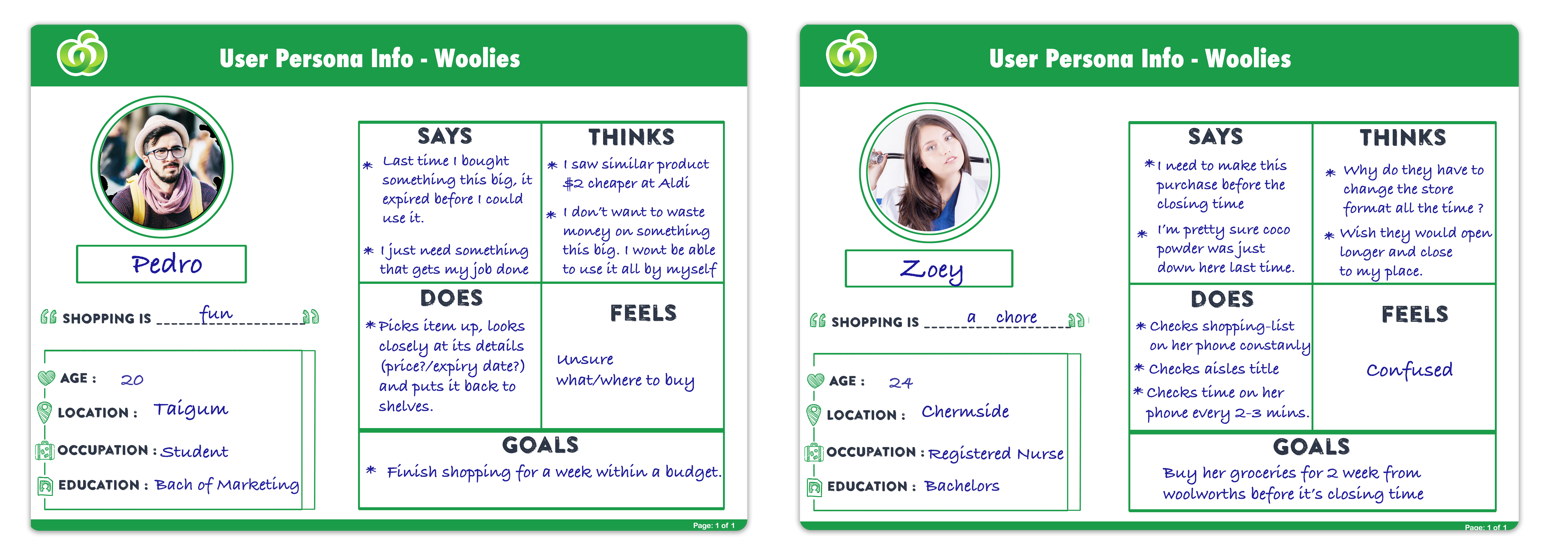
We also used empathy maps to understand user needs and build a deeper picture of who we were building for.
Bit of context
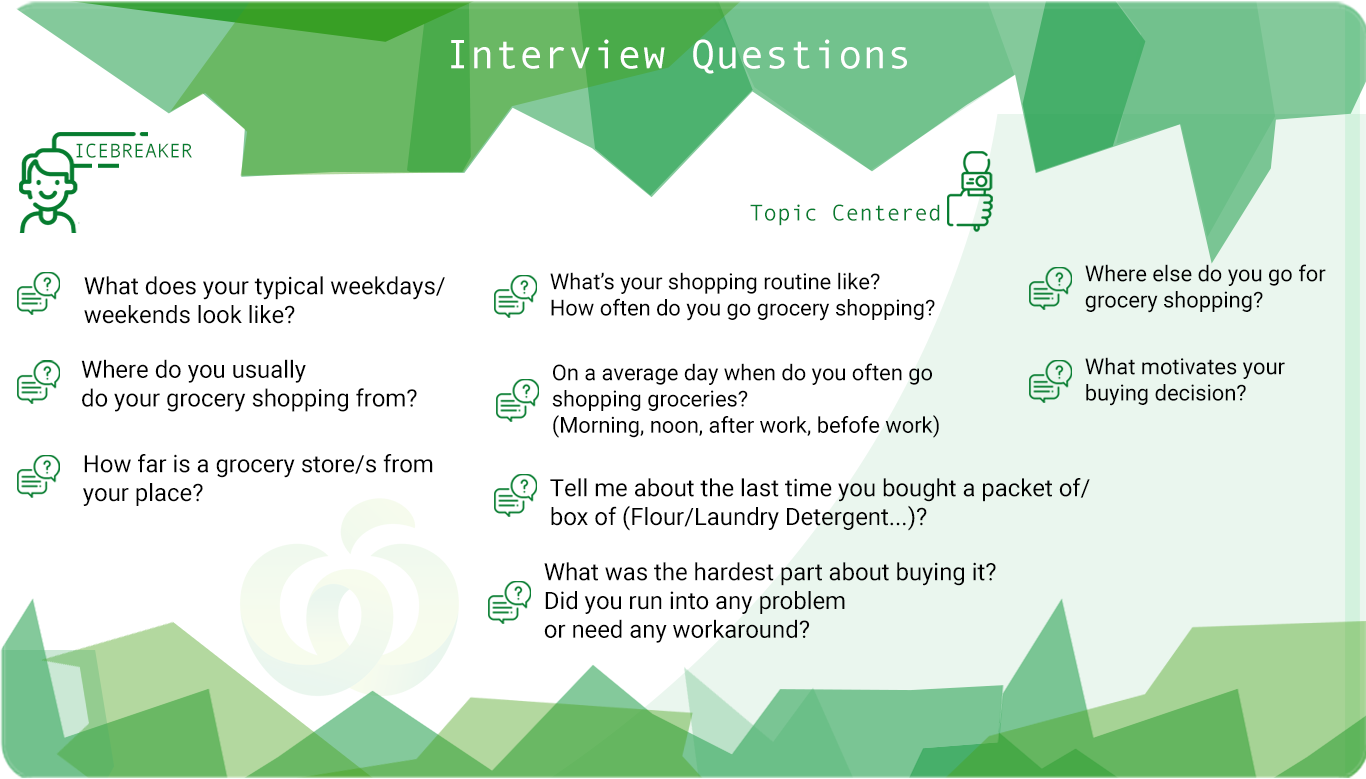
Because our research process was contextual interviewing, it wasn't timed or scripted, but we did prepare a few questions as guidelines. In writing them we kept three things in mind:
- Motivations: what is the user trying to get done?
- Activities: how does the user do it at the moment?
- Problems: what are the pain points and happy moments in the current process?
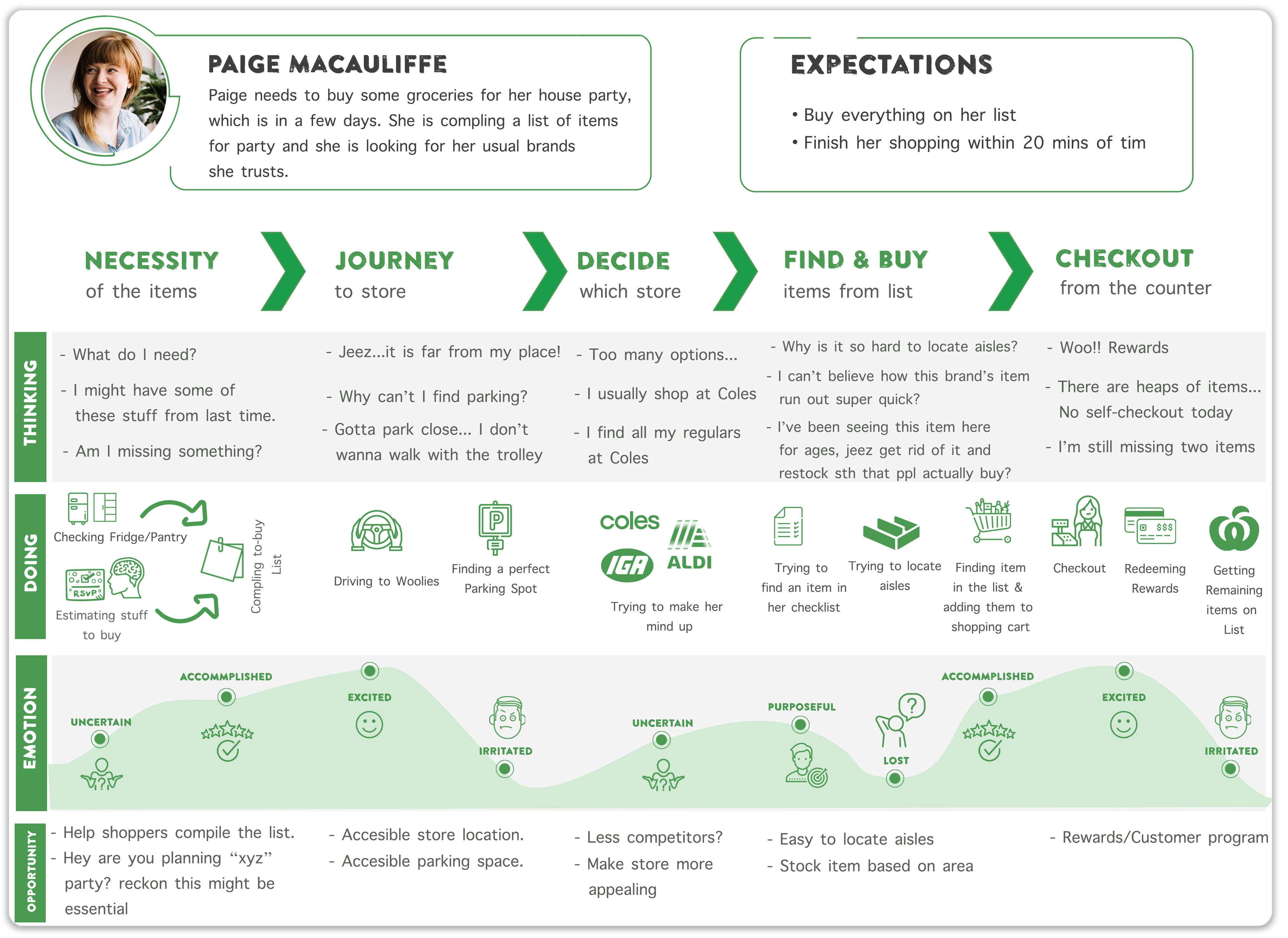
We created journey maps for all shopper personas, though not all of them are included here. One thing that emerged: for some customers the journey started at Woolworths, while for others it only started once they couldn't find what they wanted at a competitor.
For Paige, for instance, Coles was the ideal destination, but she couldn't complete her journey there as expected, and that's when she gave Woolworths a go. During that shop we tried to understand what excited her, what made her decide Coles was better, what would make her journey successful, and which pain points we could fix.
Finding patterns
We had the initial problem handed to us, plus the hypotheses we formed after general observation. With enough data on shopping habits, behaviour, journeys and interviews, it was time to narrow down what needed to be done to increase retention, and what was getting in the way. We used an affinity wall and grouped problems by nature.
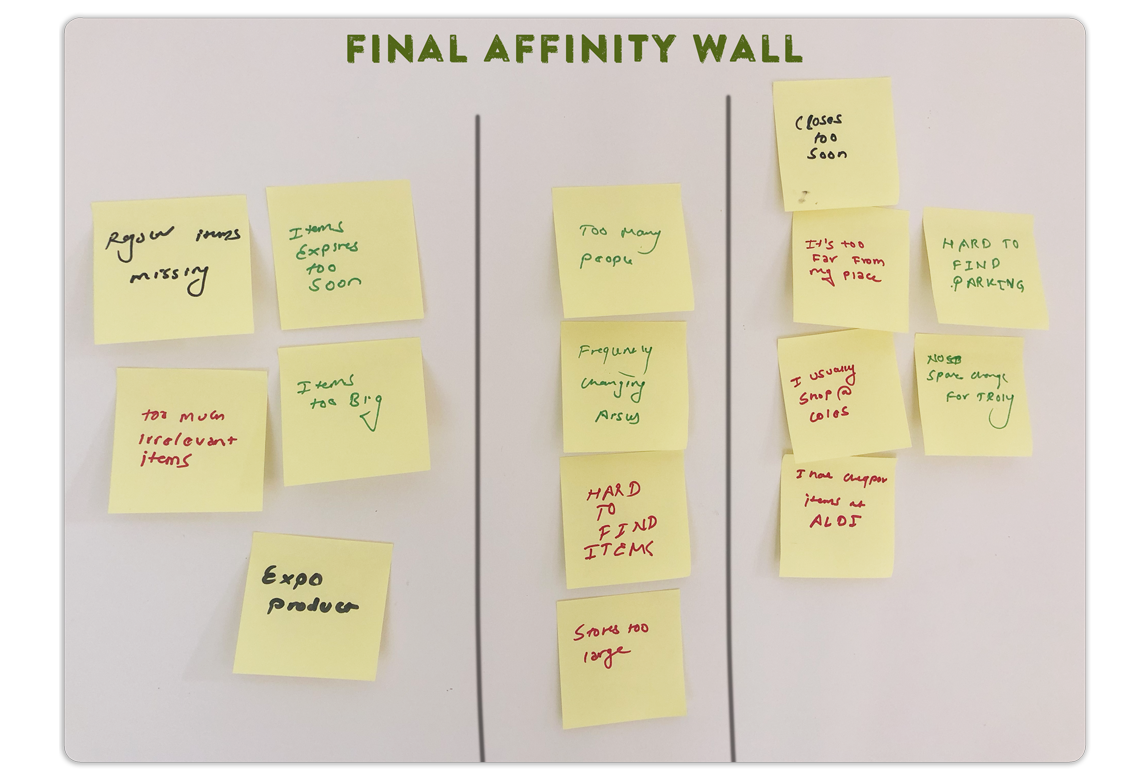
We then classified those problems so we could deal with them individually and diagnose which part of Woolworths each concerned: management, stakeholders, store front or customer habits, which in turn shaped the strategy.
| Pain point | What shoppers told us |
|---|---|
| Product |
|
| Store location and layout |
|
| Competitors |
|
Bit of context
We thought the best way to tackle a problem was to find out why it's a problem in the first place. For this we used the five whys technique from Toyota, or in our case an n-whys technique, since we kept asking users and stakeholders why until we couldn't go any further. That let us pin down which part of the customer journey the problem belonged to, which part of the service was lacking, and where it came into play in the service design process.
Re-framing the problem
From our conversation with Pedro (his problem being that Woolworths wasn't his ideal shopping centre) and applying the n-whys technique, we could see the problem wasn't on the customer side or the store side at all. It related to product size, and had to be fixed by suppliers. The method was ideal for directing each problem based on its nature.
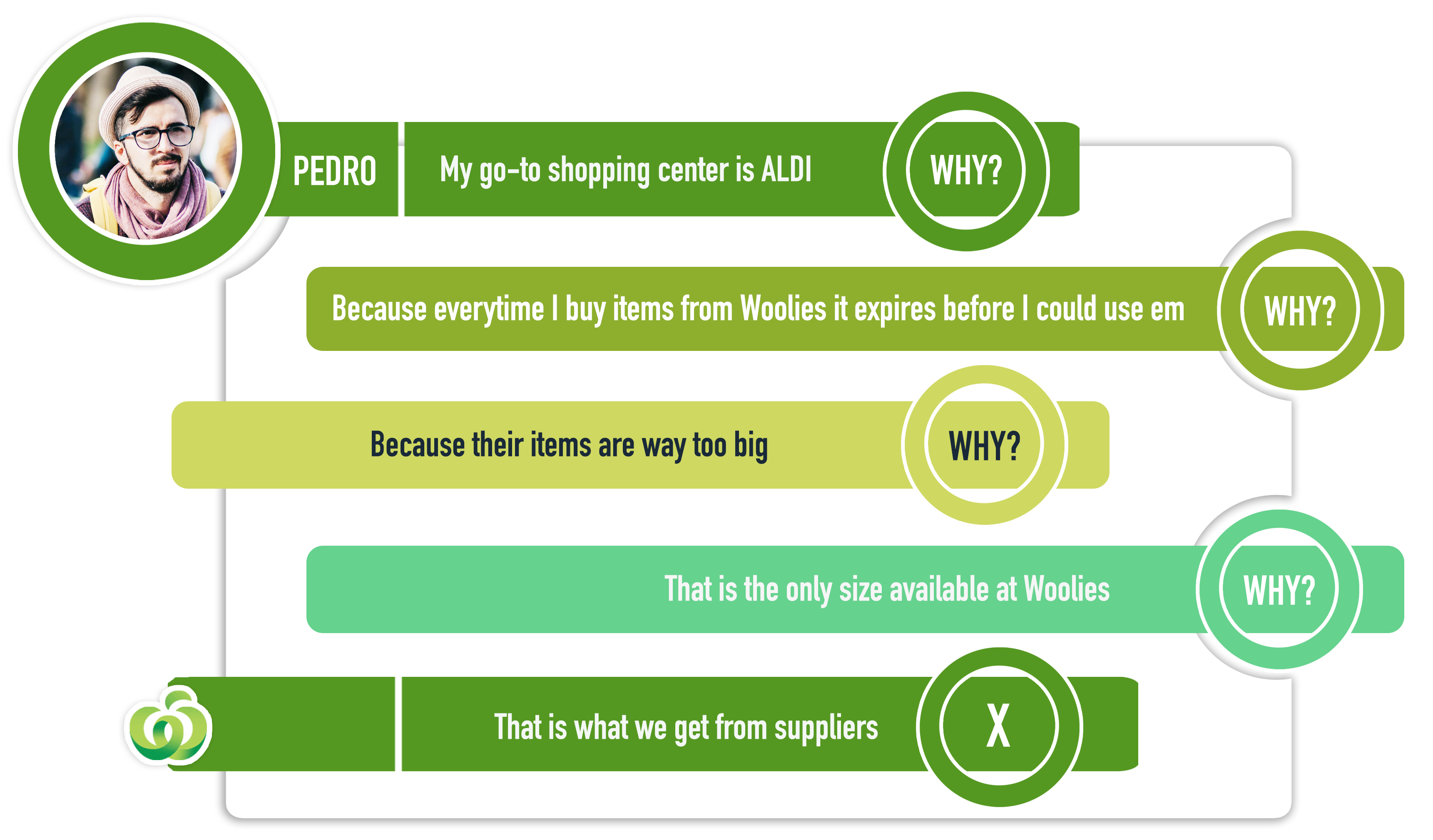
To keep this case study readable we haven't included every question. The statements below show how we reframed the initial problem.
Prototyping
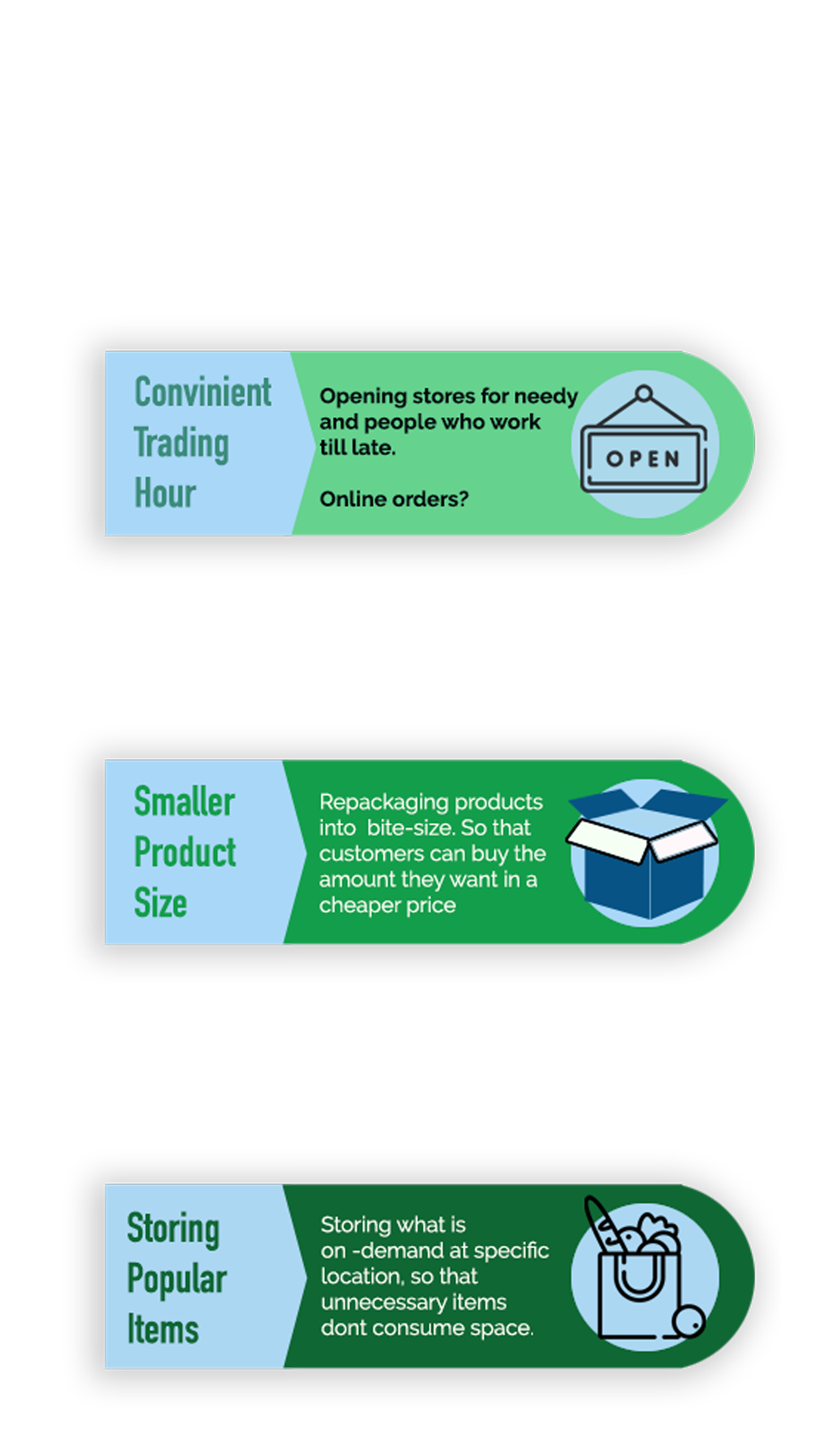
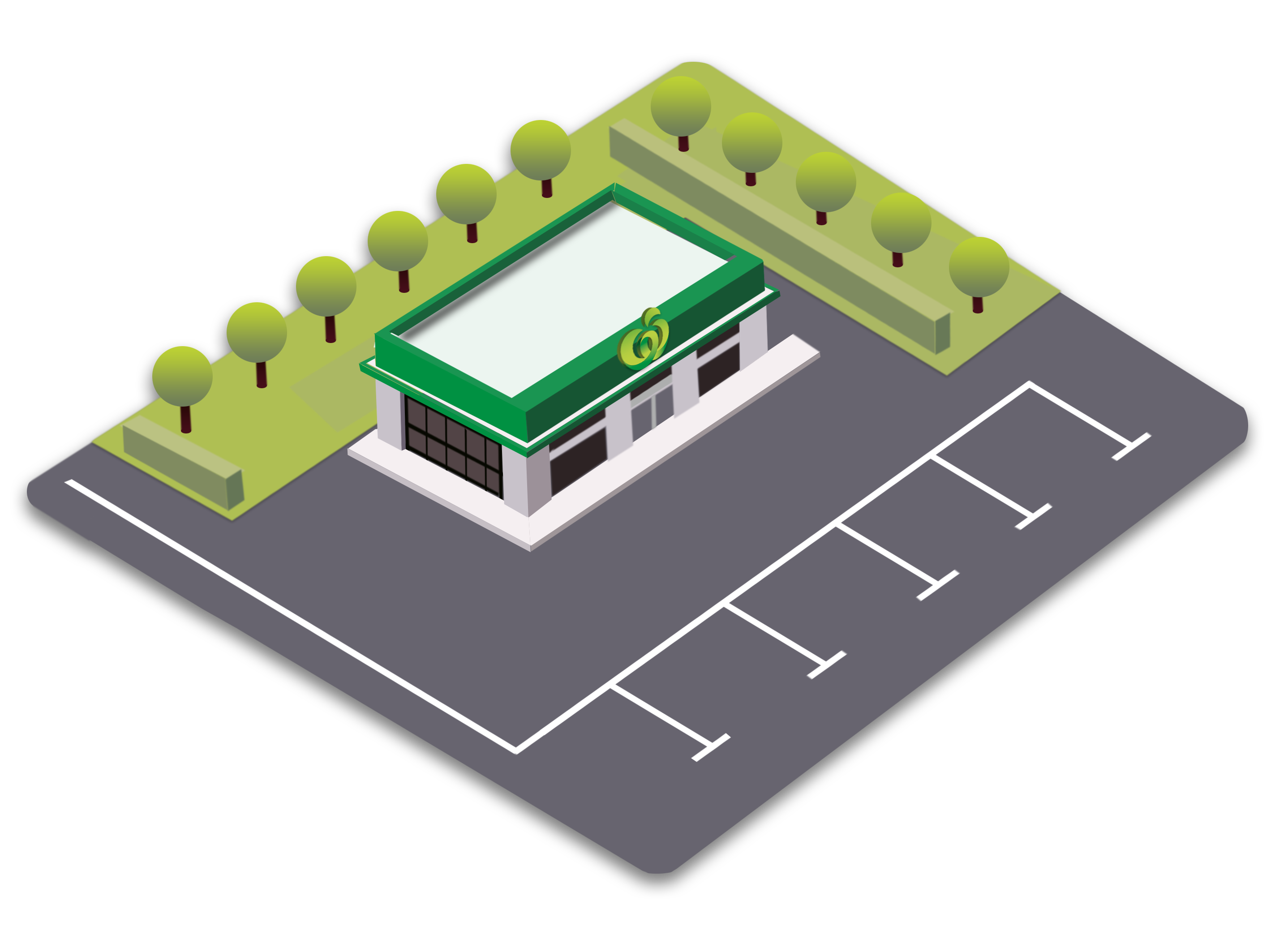
After brainstorming and filtering for solutions that would actually solve the problem, we landed on one that could work: a place that stocked byte-sized goods and only the goods in high demand in that region. Keeping the store open late would solve most of the remaining problems. I took this a step further, and all of these smaller solutions could be delivered through one thing: a convenience store.
Role play
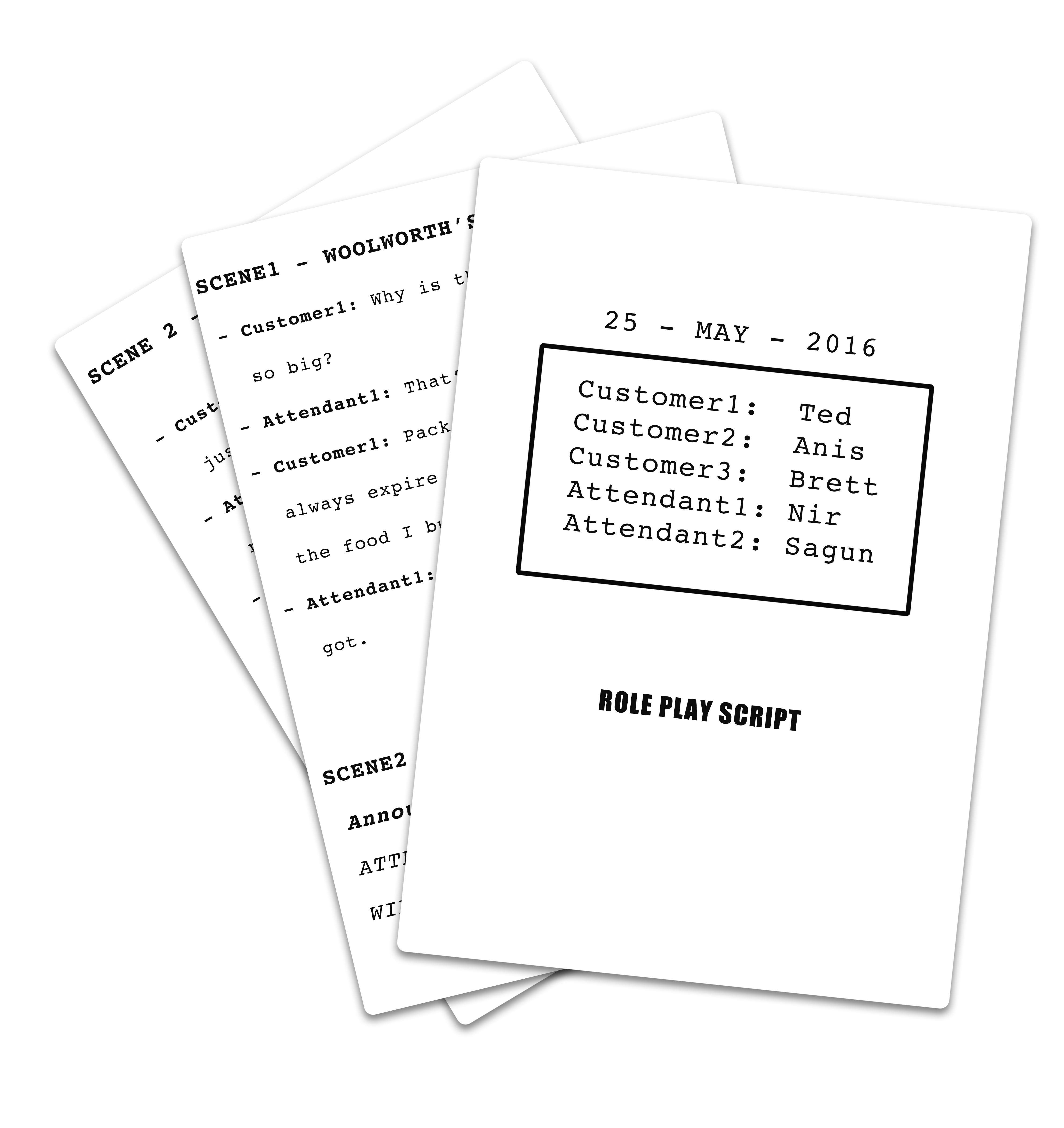
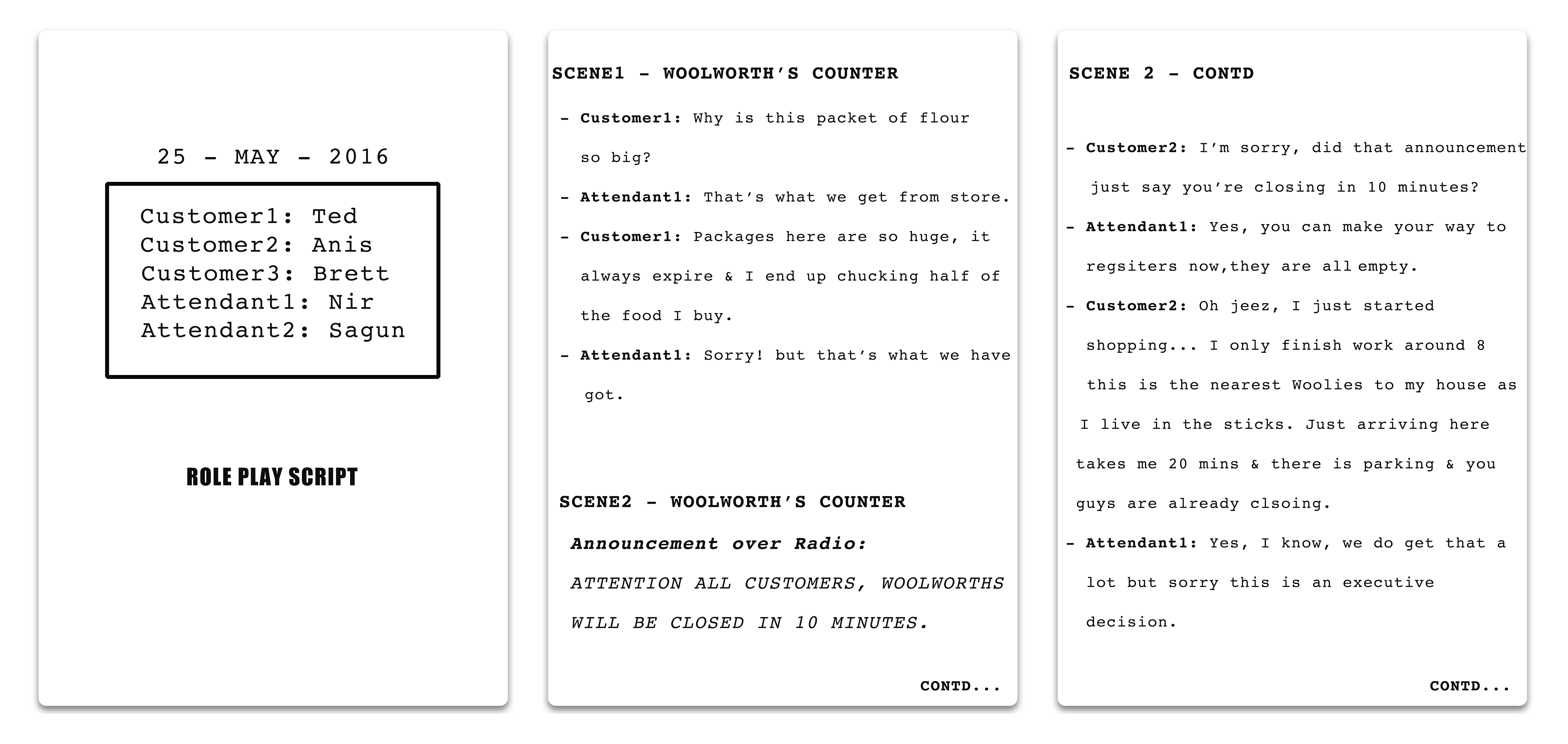
With the first prototype and the help of a few role-play artists, we performed the concept in front of stakeholders, decision-makers and UX researchers at various levels. The exercise included costumes, name tags, a 3D model and props to make it feel real.
The script alone would fill half this page, so only the first couple of pages are shown. The rest can be requested using the form at the end of this case study.
At the end of the exercise, several senior researchers suggested recalibrations to the strategy, which we took into account.
Results
All of the research data, solutions and prototypes were handed to the Woolworths group. Because the project was so large and had to be implemented from the top down with board approval, we couldn't get initial feedback. Our suggestion was to test the idea in one store for a couple of months and see whether it worked.
Update: we can't be certain, since Woolworths isn't vocal about where the idea came from, but they rolled out Metro at the end of 2016, which follows practically the same concept, and it has been successful so far.
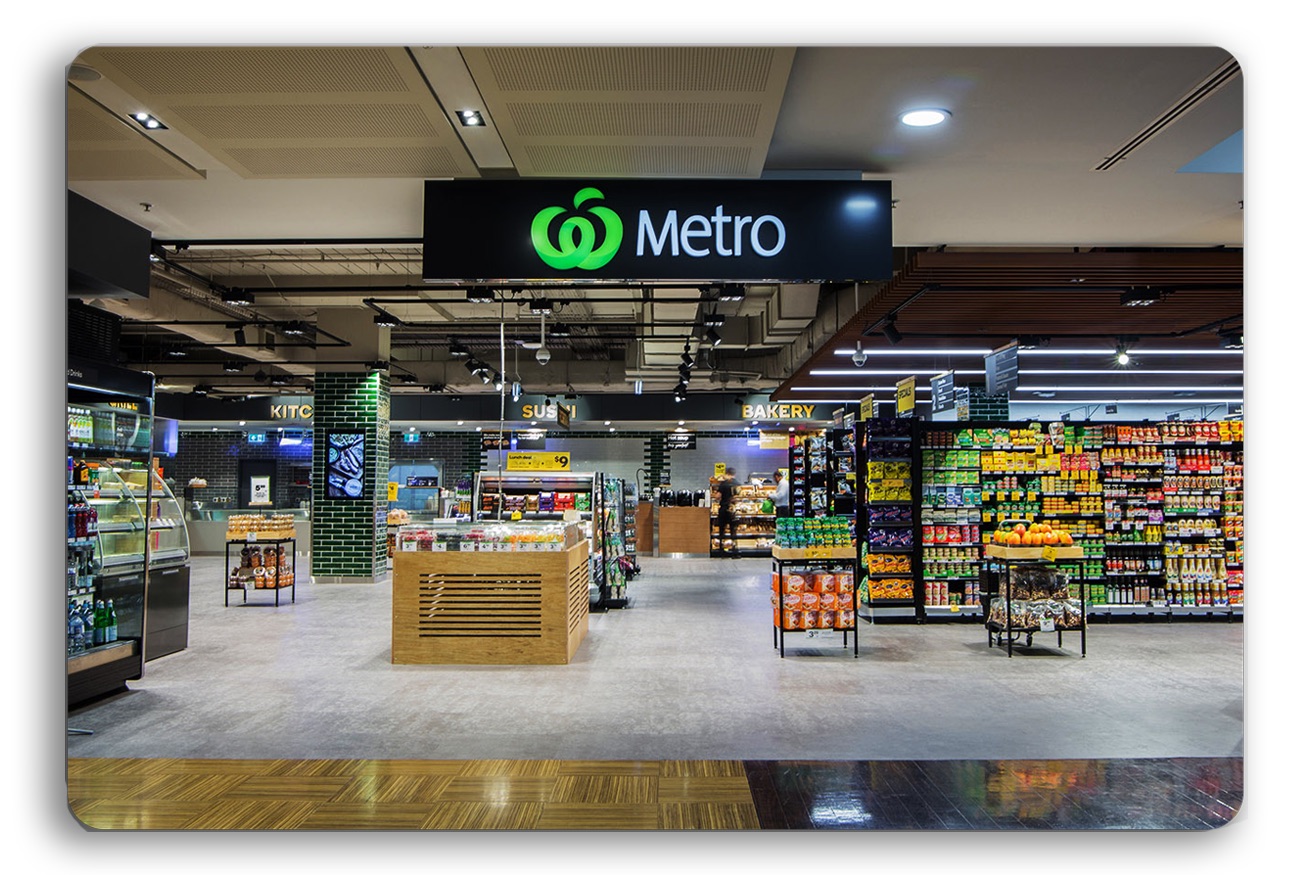
After introducing the convenience store format, the Woolworths group increased retention by 17% on the previous year within Metro alone, and decided to open six new Metro stores according to their 2017 annual report.